

A parent in Dubai can hear three contradictory pieces of advice in the same week. One friend says, “Move now, before secondary school.” Another says, “Never change a child’s curriculum after primary.” A third says the board does not matter as much as the school. All three are partly right, which is why this decision feels harder than it should.
If your child is in Grade 6 or Grade 7, the question is usually not whether a change is technically possible. In many cases, it is. The better question is whether the change solves a real problem for your child and whether your family can support the adjustment well. This article is the clear-eyed version: what changes, what does not, and how to decide without using fear as the deciding tool.
Dubai gives families more curriculum choice than almost any other city. That can be a gift, especially for Indian expatriate families whose work location may change again. It can also make every decision feel permanent. It is not. A thoughtful move at this age can work very well. A rushed move can create avoidable stress.
What “Switching Curriculum” Actually Means
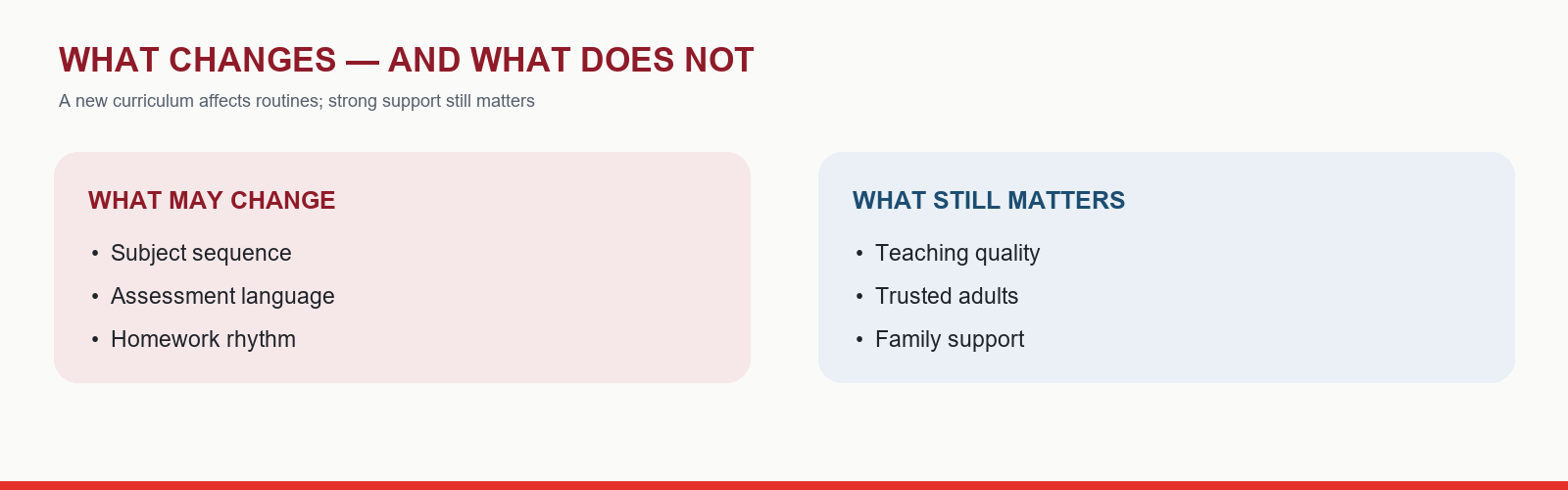
A switch may mean moving from CBSE to Cambridge, British, American or IB pathways, or moving in the other direction. It also means changing the way subjects are sequenced, taught and assessed. In Grade 6 and Grade 7, children are beginning to handle more subject teachers, longer projects and more independent study. That makes continuity valuable, but it does not make a change impossible.
CBSE tends to offer a clear, structured progression and is familiar to families who may return to India. British and Cambridge routes often introduce subject choices and assessment language earlier. American programmes can feel broad and credit-based. These are broad patterns, not quality rankings. A strong school can make a familiar curriculum feel weak; a well-supported transition can make a new curriculum feel manageable.
The First Question: What Problem Are You Trying to Solve?
Do not begin with a school brochure. Begin with the reason you are considering a move. Is your child bored, anxious, struggling with the pace, or asking for more challenge? Is the issue a poor fit with the present school rather than the curriculum? Are you planning a move to another country? Or are you drawn to a curriculum because other parents describe it as more “future-ready”?
These reasons need different answers. A curriculum change is not a cure for a difficult class friendship, an unsettled year at home, or a gap that needs targeted teaching. Equally, staying put simply because a child has already spent years in one system can be the wrong choice if the fit is clearly poor.
When a Switch Can Make Sense
- Your family has a realistic relocation plan and the new pathway better matches the likely destination.
- Your child is coping academically but needs a different style of learning, with evidence from teachers rather than assumptions.
- The new school can show how it will bridge gaps in language, mathematics, science and assessment methods.
- Your child understands the reason for the move and has time to settle before a major exam year.
When Staying Put May Be the Better Choice
Consider waiting if the reason is mostly prestige, social pressure or a short-term frustration. Consider waiting if your child is already carrying a major change: a move home, a family transition, a new diagnosis, or a difficult friendship situation. A new curriculum adds new language, methods and routines. It is easier to absorb when the rest of life is reasonably steady.
This is also the moment to be honest about timing. The closer a child is to formal external assessments, the more careful you need to be. Grade 6 or Grade 7 is often more flexible than later years, but each school should explain its own sequence. No responsible school should promise that a change will be effortless.
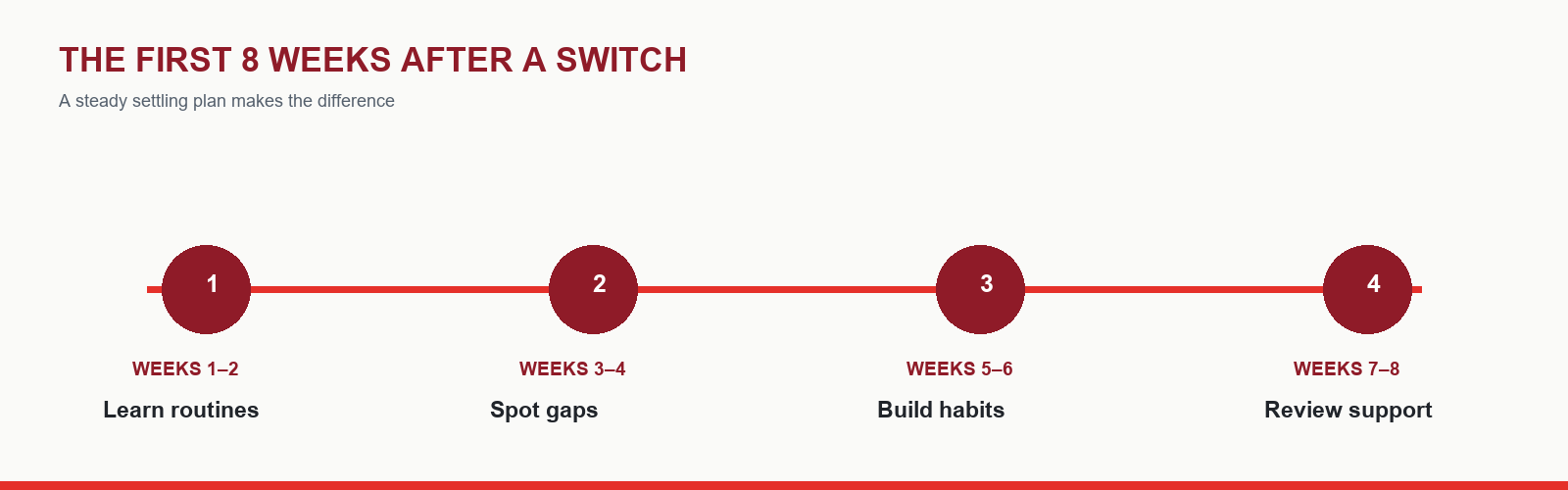
What Your Child May Notice in the First Term
The first change is usually not the content. It is the classroom rhythm. Your child may encounter different homework expectations, rubrics, group tasks, textbook language, note-taking habits and feedback styles. A child who was confident in one system may need a few weeks to decode the new one. That is normal. It is not proof that the move was a mistake.
Ask for a named person who will check in during the first six to eight weeks. Ask how the school identifies gaps without labelling a child as behind. Ask what parents should watch at home: sleep, reluctance to attend, a sudden drop in confidence, or work that is taking far longer than it should. Then give the adjustment a fair time before judging it.
A Five-Point Decision Check
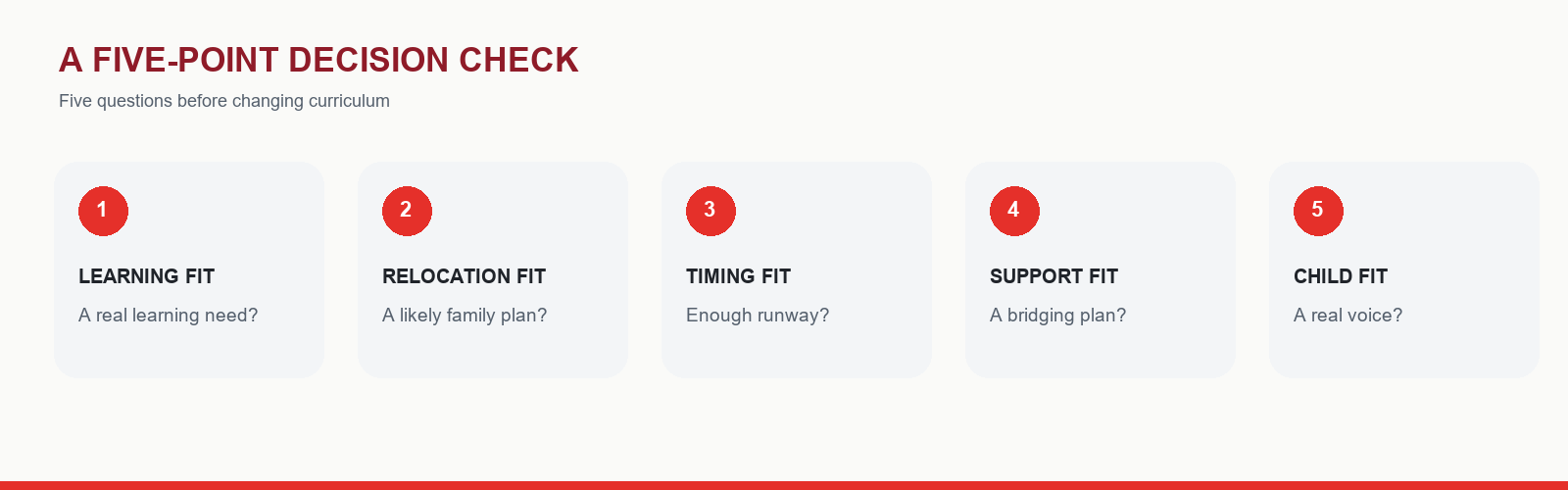
- Learning fit: Does the new approach answer a real learning need?
- Relocation fit: Does it match a likely, not imagined, family plan?
- Timing fit: Is there enough runway before high-stakes assessments?
- Support fit: Is there a clear bridging plan, not only a reassuring promise?
- Child fit: Has your child had a real voice in the decision?
If you cannot answer at least four of these clearly, pause. That does not mean “do not switch”. It means collect better information. Visit classes, request the subject map, speak to the admissions and learning-support teams, and ask your child what feels exciting and what feels worrying.
How Dhruv Dubai School Thinks About This
Dhruv Global School, Dubai, a CBSE school in Arjan, Al Barsha South, regulated by KHDA, does not tell every family that one curriculum is right for every child. A curriculum is part of the decision; the quality of teaching, relationships, challenge, support and school-home communication matter just as much.
For a child joining from another system, the useful question is practical: what have they learned, what will be new, and how will adults help them close the gap without making them feel they have failed? Families should expect a calm conversation about readiness and a clear first-term plan.
Questions to Take to an Admissions Meeting
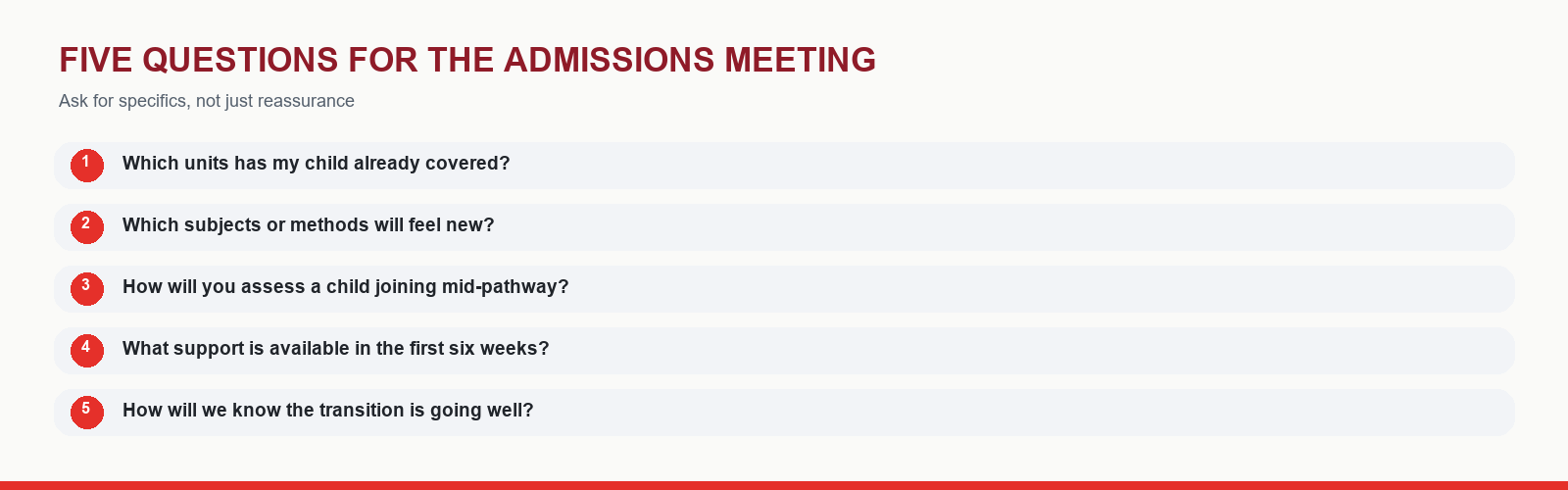
- Which units has my child probably already covered, and which are new?
- How do you assess a child joining from another curriculum?
- What support is offered in the first six weeks?
- How will we know whether the transition is going well?
- Who should we contact if the workload or confidence becomes a concern?
Final Thoughts
It is not automatically too late to switch curriculum in Grade 6 or Grade 7. For the right child, with the right reasons and a sensible support plan, it can be a positive reset. But it is a change that deserves more than a comparison chart and a WhatsApp recommendation. Give the decision time. Include your child. Ask schools for specifics. The goal is not to choose the most impressive label. It is to choose the environment in which your child can learn with confidence.