Bullying can make school feel unsafe, lonely and exhausting for a child. It can affect attendance, friendships, confidence, sleep and willingness to participate in class. For parents, it can be painful to hear that a child is being excluded, mocked, threatened or targeted online. For teachers, it can be difficult to spot every incident, especially when it happens in subtle ways.
The most helpful response is not panic or blame. It is calm, coordinated action.
When parents and teachers listen carefully, share facts and create a practical support plan, children are more likely to feel protected and believed. This guide explains how to recognise bullying, what to do when a child speaks up and how school-home partnership can make a real difference.
What is Bullying?
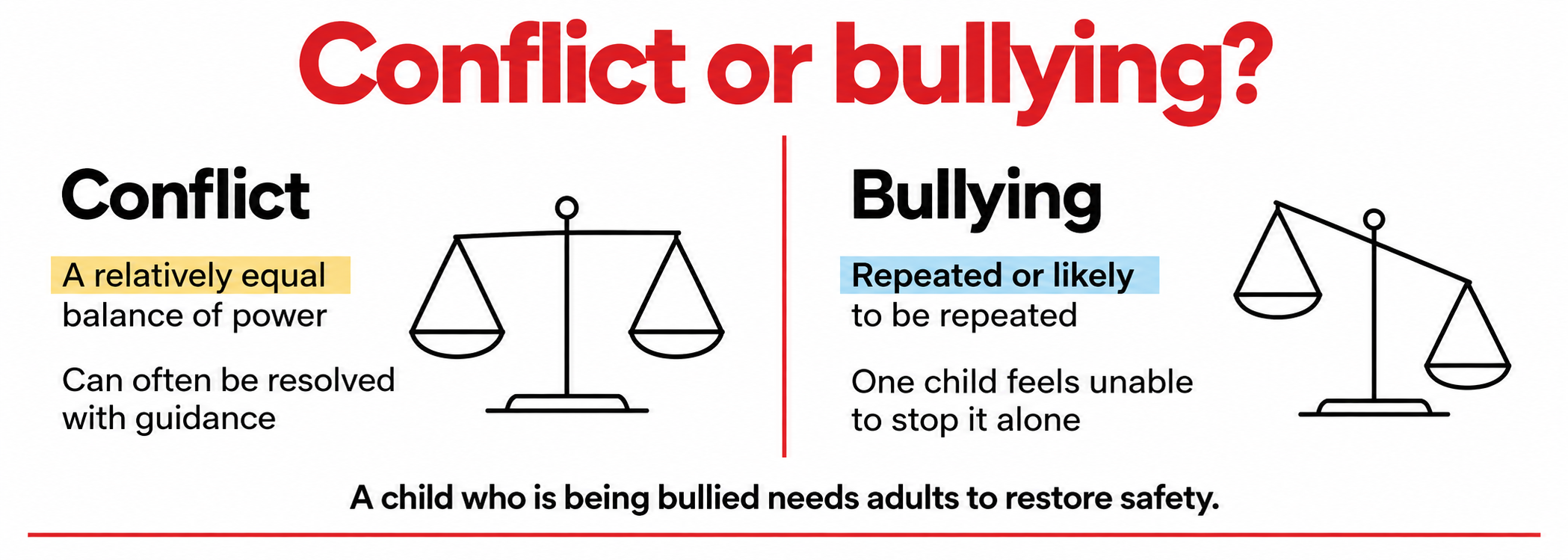
Bullying is more than a one-off disagreement between children. It is unwanted aggressive behaviour that involves a real or perceived imbalance of power and is repeated, or likely to be repeated. It may be physical, verbal, social or digital.
Bullying can include:
- Repeated name-calling, teasing or cruel jokes
- Threats, pushing, hitting or damaging belongings
- Excluding someone from games, groups or conversations
- Spreading rumours or sharing private information
- Using social media, group chats or gaming platforms to embarrass or target someone
- Pressuring others not to be friends with a child
Not every conflict is bullying. Children can disagree, argue or make mistakes with peers. A conflict usually involves a relatively equal balance of power and can often be resolved with guidance. Bullying is different because one child feels unable to stop it alone.
That difference matters. A child who is being bullied needs adults to take the situation seriously and help restore safety.
What Are the Signs Your Child May Be Being Bullied?
Children do not always use the word “bullying”. Some may worry that adults will make the situation worse. Others may feel embarrassed, blame themselves or believe they should handle it alone.
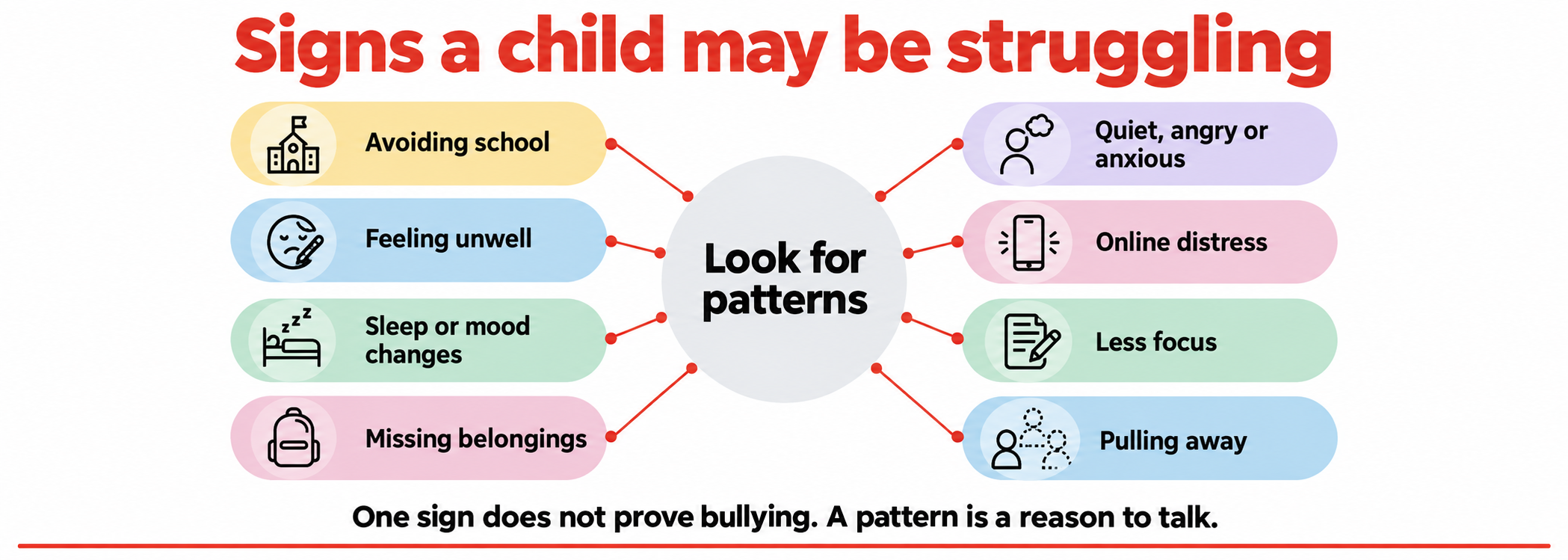
Watch for patterns rather than relying on one sign. Possible indicators include:
- Reluctance to go to school or sudden requests to stay home
- Frequent headaches, stomach aches or feeling unwell before school
- Changes in sleep, appetite, mood or confidence
- Lost, damaged or missing belongings
- Pulling away from friends or activities they once enjoyed
- A noticeable drop in participation, concentration or academic performance
- Distress after using a phone, gaming platform or social-media app
- Becoming unusually quiet, angry or anxious
What Should You Do If Your Child Tells You They’re Being Bullied?
When a child tells you something difficult, your first response can shape whether they keep talking.
Start by listening without interrupting. Thank them for telling you and make it clear that they are not in trouble. Avoid immediately asking why they did not stand up for themselves or why they did not tell you sooner. These questions can accidentally make a child feel responsible for what happened.
- “Thank you for telling me.”
- “I believe you.”
- “You do not deserve to be treated that way.”
- “We will work out the next step together.”
- “What would help you feel safer tomorrow?”
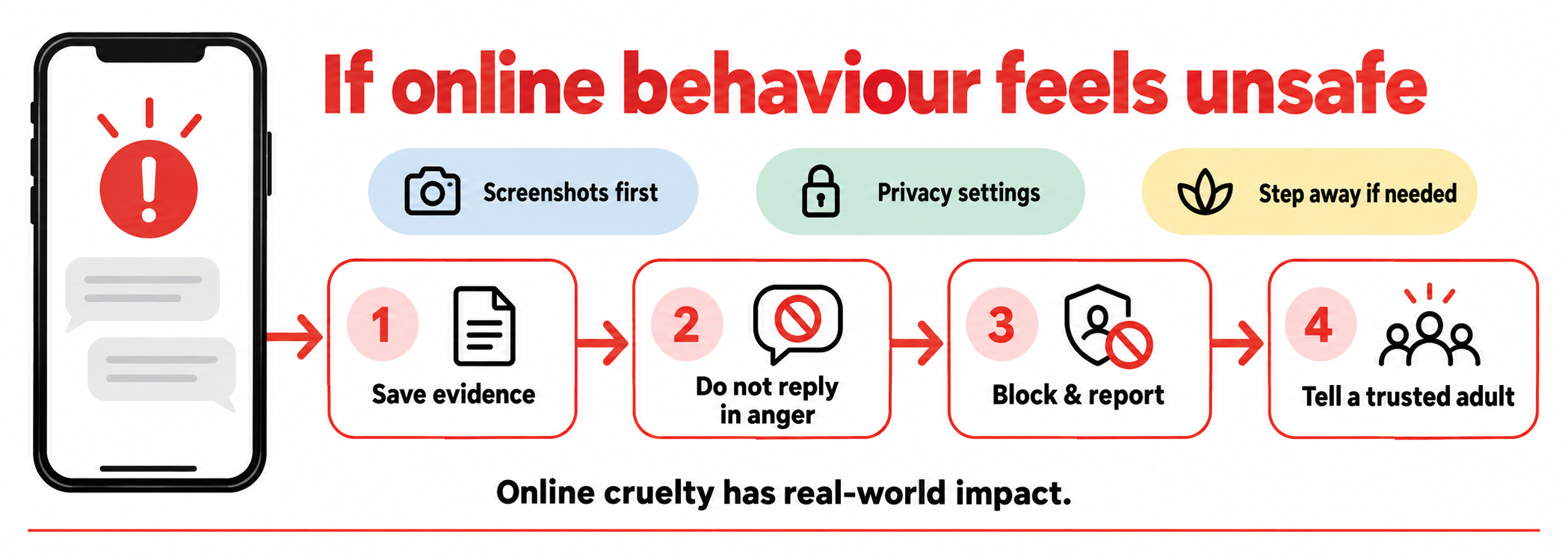
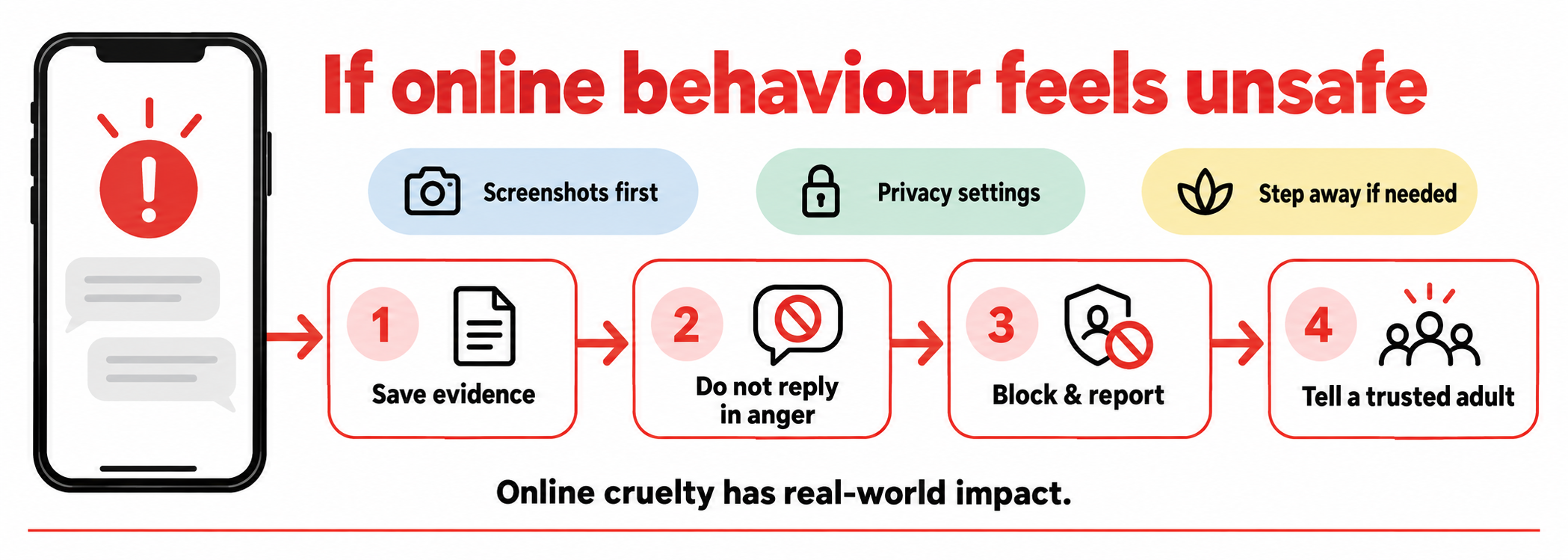
Then gather facts calmly. Ask what happened, where it happened, who was involved, whether anyone saw it and whether it has happened before. If the concern involves messages, screenshots, posts or gaming chats, save the evidence. Do not encourage a child to retaliate online or respond in anger.
It is also important not to contact the other child directly or confront their family while emotions are high. This can make a situation harder for the child at school. Instead, contact the school through the appropriate teacher, pastoral lead, counsellor or safeguarding contact.
How Should Schools and Teachers Respond to Bullying?
Teachers and school staff play a vital role because they can observe patterns, support the child during the school day and put protective measures in place.
When bullying is reported or witnessed, the immediate priorities should be safety, separation and calm fact-finding. Adults should intervene, separate the children involved and check that everyone is safe. A forced apology or an immediate face-to-face meeting is not always appropriate, especially when there is a power imbalance.
- Recording the concern clearly and promptly
- Speaking to the child privately and respectfully
- Gathering information from relevant staff and witnesses
- Increasing supervision in places where incidents may occur
- Identifying a trusted adult the child can approach
- Communicating realistic next steps to parents
- Checking in again after the first response
How Parents and Teachers Can Create a Bullying Support Plan
1. Who is the child’s safe adult?
2. Which moments feel difficult?
3. What will change straight away?
4. When will adults review progress?
Agree on a clear follow-up date. Ask whether the child feels safer, whether incidents have stopped and whether the support is working. A single conversation is rarely enough; consistent follow-through is what builds trust.
UNICEF also highlights the value of parents and schools working together to create safer, more supportive environments for children.
How to Talk to Your Child About Bullying Without Shutting Them Down
A child may only share small pieces of the story at first. Resist the urge to solve everything in one conversation.
Use open, low-pressure questions:
- “Who do you feel comfortable with at school?”
- “Has anyone been making school feel difficult lately?”
- “What happens at break or lunchtime?”
- “Are there group chats or online spaces that feel unkind?”
- “What would make tomorrow easier?”
What Should You Do If Your Child Is Bullying Someone Else?
This situation needs a calm but firm response too. A child’s behaviour should be addressed without permanently labelling them as “a bully”. The goal is accountability, repair and skill-building.
Ask what happened, who was affected and what may have led to the behaviour. Make it clear that hurtful behaviour is not acceptable, even if the child felt angry, left out or pressured by friends.
Work with the school to understand the impact, consequences and steps needed to repair harm. Depending on the situation, a child may need support with empathy, emotional regulation, friendship skills, online conduct or managing peer pressure.
Accountability and support can exist together.
What Should Parents Do About Cyberbullying?
Bullying does not always end when the school day ends. Group chats, gaming platforms, photo-sharing apps and social media can extend conflict into the home.
Encourage children to:
- Save screenshots or messages before blocking an account
- Avoid replying in anger
- Use privacy settings and report harmful content
- Tell a trusted adult early
- Step away from online spaces that feel unsafe
How Dhruv Dubai School Approaches Bullying Concerns
At Dhruv Global School, Dubai, student wellbeing is treated as part of a child’s learning experience, not as something separate from it. The school’s published framework includes dedicated Anti-Bullying, Child Protection, Inclusion, Behaviour Management, Social Media and Cyber Security policies. This indicates that bullying concerns are approached through a formal safeguarding and wellbeing structure, rather than being treated as an ordinary peer disagreement.
When a parent or student raises a concern, the priority should be to understand what has happened, establish whether the child feels safe and ensure the right adults are involved. The response may differ according to the situation, but a constructive approach includes listening carefully to the child, gathering information separately, maintaining appropriate communication with families and agreeing practical steps that help the child feel safe at school.
Final Thoughts
Bullying can leave a child feeling powerless, but adults can change that experience. The most important message is simple: you are not alone, you are not to blame, and adults will help.
Parents do not need to have every answer immediately. Teachers do not need to solve every concern in one day. What children need most is a response that is steady, respectful and consistent.
Listen carefully. Take concerns seriously. Put practical support in place. Check back.
When parents and teachers work as one team, school becomes more than a place where bullying is dealt with. It becomes a place where children learn that safety, respect and belonging matter.
FAQs
Should I tell the school if my child asks me not to?
Take the child’s feelings seriously and explain why you may need to involve a trusted adult to keep them safe. Where possible, agree together on what will be shared and with whom.
Should children be made to apologise immediately?
When should I seek urgent help?
Act immediately if there are threats of serious harm, violence, sexual abuse, self-harm or a child is in immediate danger. Contact emergency services, relevant child-protection authorities and the school’s safeguarding lead without delay.