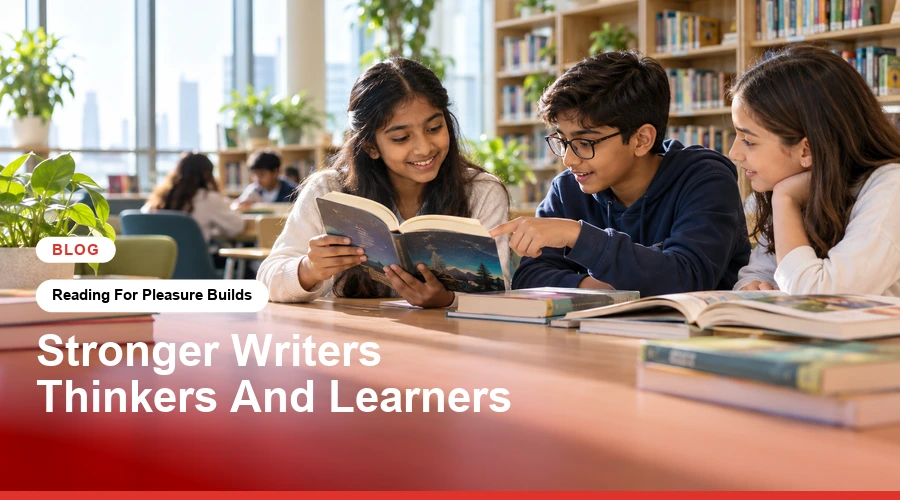
Reading for pleasure is often treated as an optional extra. It sits somewhere after homework, tuition, sport, screens, family commitments and the practical rush of everyday life. For many Dubai parents, especially those raising children in a high-achievement school environment, reading can start to feel like one more task to complete.
That is the wrong way to see it.
When children read because they are curious, amused, moved or simply absorbed by a story, they are doing far more than improving English. They are building vocabulary, attention, imagination, perspective, writing fluency and the ability to think through complex ideas. These are not separate school skills. They are foundations for learning across every subject.
For families looking for a CBSE school in Dubai, the question is therefore not only whether a child can read accurately. It is whether they see reading as something that belongs to them.
What reading for pleasure actually means
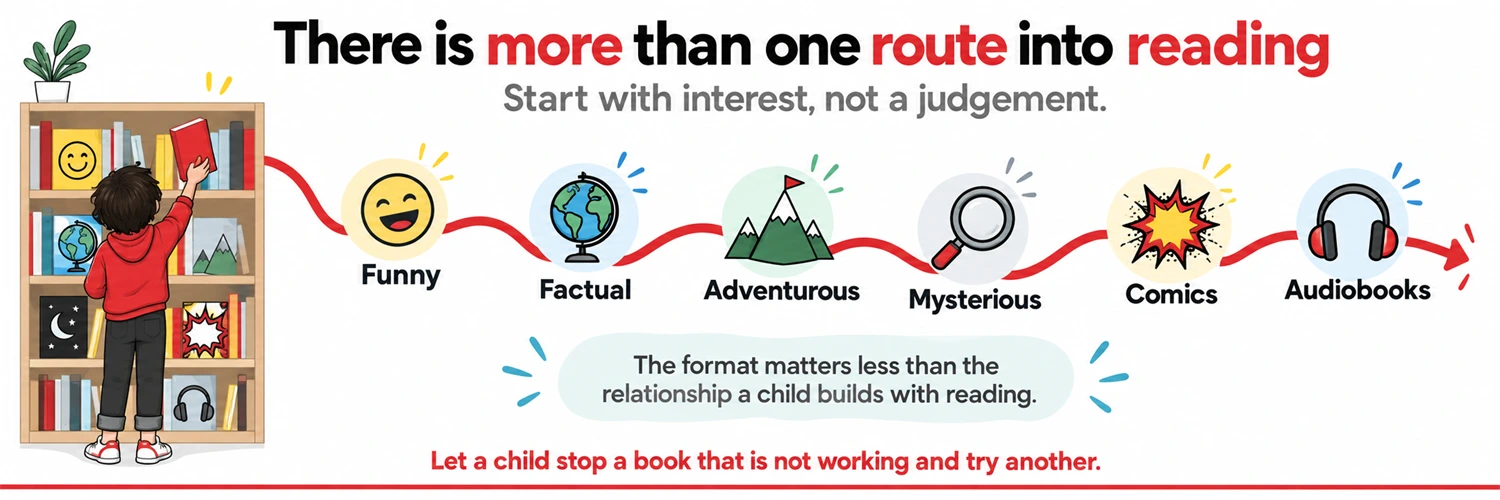
Reading for pleasure means choosing to read because the experience is enjoyable or meaningful. It can be a fantasy novel, a sports biography, a comic, a mystery series, a science magazine, a graphic novel, poetry, history, a book in Arabic, or an audiobook followed with a printed copy.
The format matters less than the relationship the child develops with reading.
A student who chooses a book, returns to it voluntarily and talks about it afterwards is practising sustained attention. They are meeting unfamiliar words in a meaningful context. They are following cause and effect, noticing character choices, predicting outcomes and comparing a fictional situation with real life. These habits transfer into classroom learning.
The OECD’s PISA findings have repeatedly shown an association between reading for enjoyment and stronger reading performance. Its research also highlights that students benefit when pleasure reading is combined with critical thinking and strategies for understanding, remembering and summarising what they read. Reading widely matters.
This does not mean every child must love the same type of book. It means every child deserves a route into reading that feels accessible.
Why reading for pleasure strengthens writing
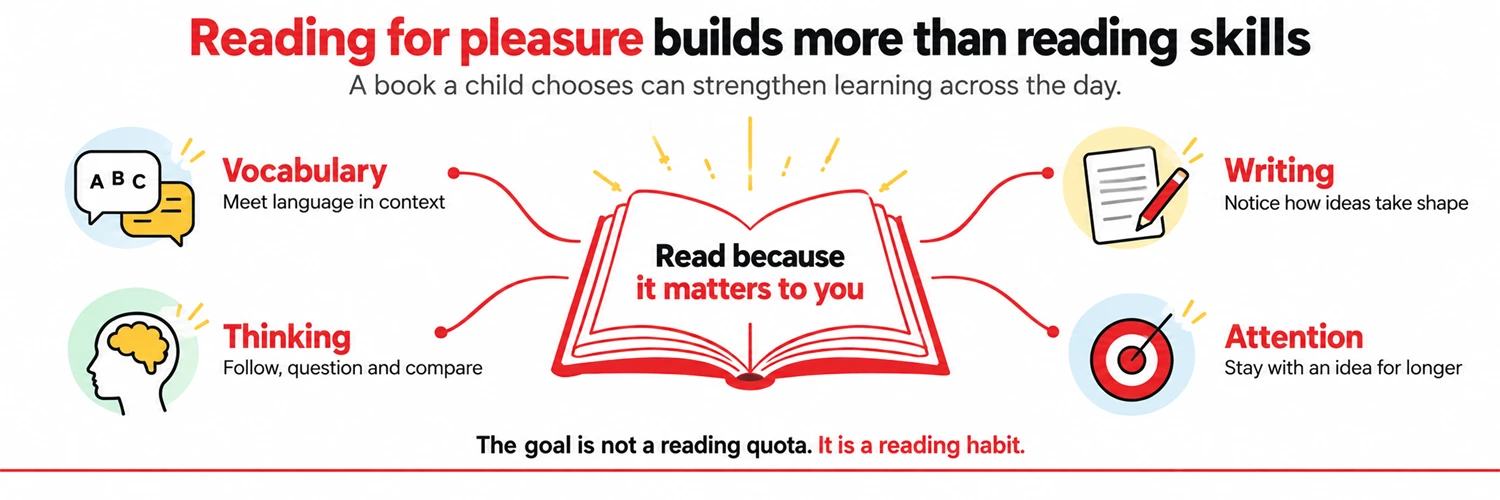
Good writing is not created only by memorising grammar rules. Grammar matters, of course. So do spelling, paragraphing and sentence control. But a child also needs a feel for language: how a sentence can create suspense, how a detail can make a setting believable, how a writer can explain an idea clearly and how a paragraph can carry the reader forward.
Reading supplies that experience.
Children who read regularly encounter thousands of examples of language being used with purpose. They notice dialogue, description, humour, argument, structure and tone. At first, they may copy these patterns almost unconsciously. Later, they begin to use them deliberately.
A child who has read an exciting mystery has seen how writers withhold information. A child who reads biographies sees how facts can be shaped into a human story. A child who reads non-fiction learns how headings, examples and explanations make complex ideas easier to understand. A child who reads poetry learns that a small number of precise words can carry a large feeling.
That is why reading and writing should not be separated in a child’s mind. Reading shows children what writing can do. Writing gives them an opportunity to respond.
The National Literacy Trust has found clear links between reading enjoyment, writing enjoyment, confidence and writing behaviour. This makes sense. A child who sees writing as a way to tell stories, share opinions or make meaning is more likely to write with voice than a child who sees it only as a school exercise.
Reading develops thinkers, not only readers
Parents often ask whether fiction is useful when children could be reading more obviously academic material. Both have value. Non-fiction builds knowledge and helps students navigate factual texts. Fiction asks a different kind of question: what does it feel like to stand in another person’s position?
A novel may introduce a child to a place, era, family structure or dilemma beyond their own experience. It asks them to infer what a character knows, fears or hopes. It asks them to hold more than one viewpoint at a time.
These are thinking skills.
The strongest learners do not simply find facts. They ask questions about facts. They notice what is missing, compare sources, recognise assumptions and explain why they agree or disagree. Reading gives them repeated practice in these habits.
A story with an unreliable narrator teaches a student not to accept every voice at face value. Historical fiction can prompt questions about whose experience appears in a textbook. A science article can lead to questions about evidence, causation and bias. A biography can help a child understand how choices are shaped by circumstances.
This is especially important in a world of quick summaries, short videos and AI-generated answers. Children will need the ability to stay with an idea long enough to evaluate it. Reading longer texts remains one of the simplest ways to practise that discipline.
Why reading matters in Dubai’s multilingual school environment
Dubai children often grow up with more than one language in their daily lives. They may speak one language with family, learn English at school, study Arabic and hear several languages in their friendship groups. This is a strength. It gives children access to different ways of thinking, storytelling and belonging.
But it can also make reading choices more complicated. Parents may worry that reading in a home language will hold back English. Others worry that English reading will weaken a child’s connection to family language and culture.
The better answer is not either-or. Reading in any language develops comprehension, imagination and the habit of making meaning from text. Children can read English novels, Arabic stories, Hindi comics, bilingual picture books or translated classics. What matters is that they read, understand and enjoy.
For Indian expatriate families, books can also help children make sense of a life lived across places. A child may be growing up in Dubai while maintaining close ties to India, relatives abroad and a future that may include another move. Stories can give them language for belonging, change, friendship and identity.
What stops children from reading for pleasure
Many children who say they “do not like reading” have not rejected reading itself. They may have rejected a narrow version of it.
Perhaps every book they were given felt too difficult. Perhaps reading became connected only with correction. Perhaps they were told that comics do not count, that re-reading is a waste of time, or that only classic novels are worthwhile. Perhaps their after-school timetable leaves no room for quiet attention.
A Note on Too Much: reading should not become another performance target. A daily log can be useful for some children. For others, it turns a private pleasure into a quota. If a child is already reluctant, begin by reducing pressure, not adding it.
- What topics do you enjoy outside school?
- Would you rather read something funny, factual, adventurous or mysterious?
- Do you prefer a short book, a series, a magazine or a graphic novel?
- Would you like to read alone, read with someone, or listen to an audiobook first?
- Which book did you dislike, and what did not work for you?
The answer gives you a starting point. It is not a judgement.
How parents can build a reading culture at home
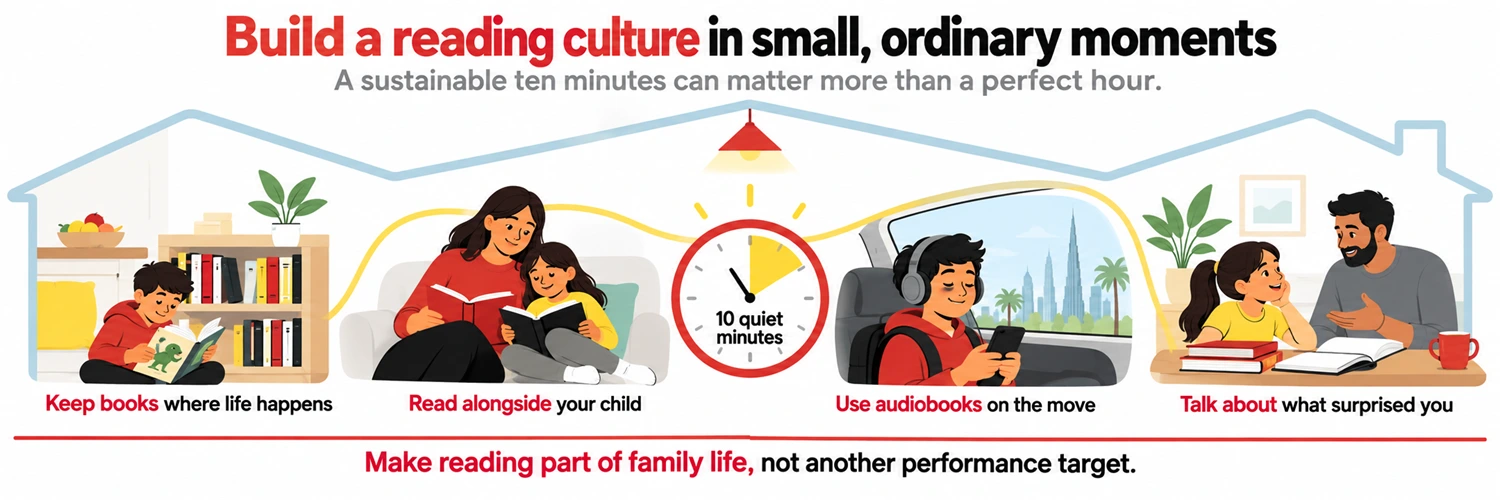
Children learn from what adults make normal. If books are visible, discussed and used for enjoyment, reading feels like part of family life. If reading appears only before examinations, it feels like work.
You do not need a perfect home library. Start small.
Keep a few books, magazines or comics where the family actually spends time. Visit a library or bookshop without insisting that a child finish the book they choose. Let children abandon a book that clearly is not working, then help them find another. Read alongside them, even if you are reading a newspaper article, recipe, novel or work-related material.
Protect a small reading window. Ten quiet minutes before bed can be more sustainable than a strict hour that never happens. During car journeys, try audiobooks. On weekends, let a child read after breakfast before the day becomes busy.
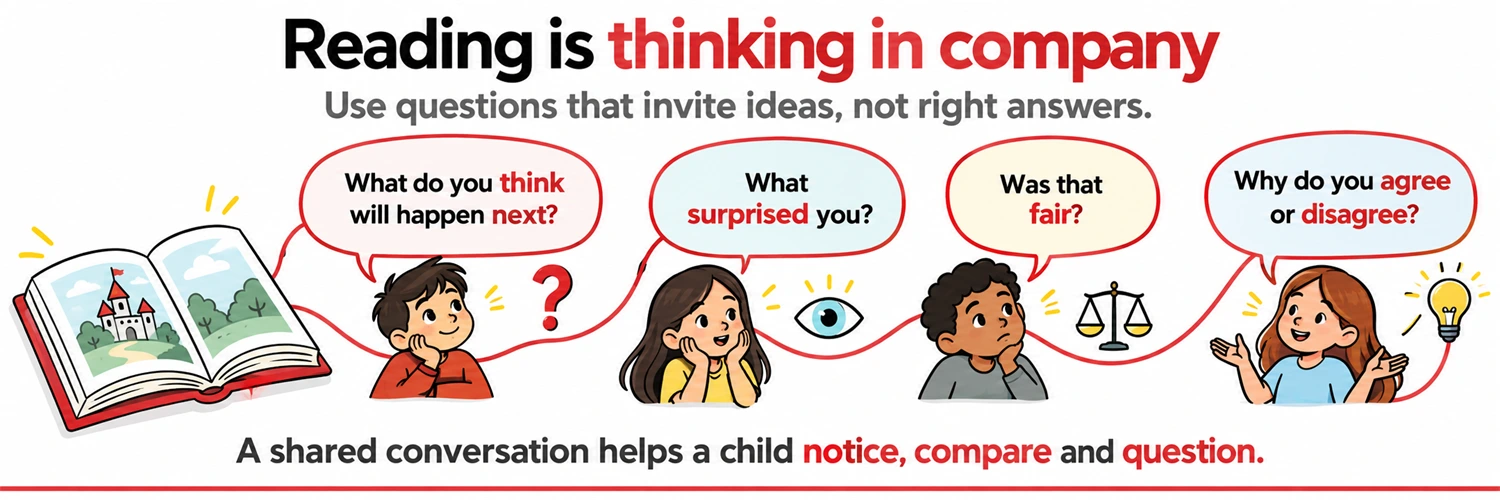
Most importantly, talk about what you are reading. Not like a test. Like a conversation.
“What do you think will happen next?”
“Was that fair?”
“Which character would you want as a friend?”
“Did that fact surprise you?”
These questions show a child that reading is thinking in company.
How schools can protect reading for pleasure
A strong school reading culture is not built through one annual book week. It is built through everyday choices: access to varied books, time to browse, teachers who recommend texts with enthusiasm, read-aloud moments, student book talks and permission to choose.
Dhruv Global School, Dubai, a CBSE school in Arjan, Al Barsha South, regulated by KHDA, sees literacy as part of the wider work of developing confident, curious learners. Reading supports communication, imagination, digital literacy, reflection and independent thought. It also supports the school’s wider emphasis on global citizenship, cultural sensitivity and social-emotional learning.
The aim should not be to make every student read the same book at the same speed. It should be to make books feel available, relevant and worth returning to.
When visiting a school in Dubai, parents can ask:
- How do teachers help reluctant readers find the right book?
- Are students able to choose from fiction, non-fiction, comics, magazines and different reading levels?
- Is reading discussed outside English lessons?
- How are home languages and diverse cultural experiences included?
- Does the school make time for reading, or only assess it?
These questions reveal whether a school treats reading as a score or as a lifelong habit.
Final Thoughts
The child who reads for pleasure is not simply preparing for an English examination. They are practising attention in a distracted world. They are collecting language for thoughts they have not yet learned to express. They are meeting different lives, testing ideas, building confidence and discovering that knowledge can be deeply enjoyable.
The goal is not to force a child to become “a reader” overnight. It is to help them find one book, one subject, one author or one format that makes them want to turn the next page.
That is where stronger writing begins. Stronger thinking follows.