
Sustainability in Schools: Practical Steps for a Greener Future
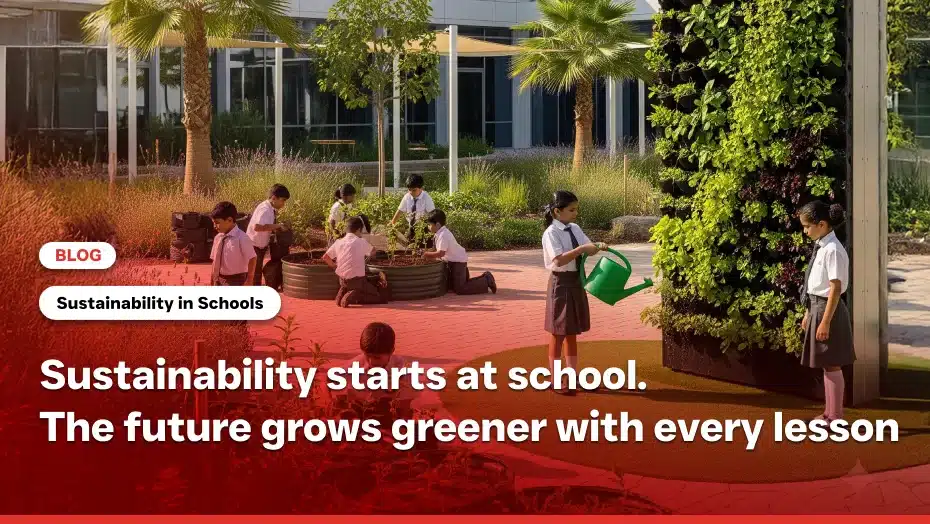
Today, countries worldwide are realizing the importance of sustainability. They realize that the resources available currently need to be preserved for future generations. Among them, the emirate and especially Dubai have always been strongly committed to preserving the environment, reducing carbon emissions, and creating a better future for generations to come. Education plays a powerful role in achieving these goals.
Schools are being encouraged to take tangible, quantifiable measures toward green education under the KHDA sustainability guidelines. In addition to educating students for academic achievement, Dubai’s sustainable schools are also assisting them in developing into considerate, accountable global citizens. This blog examines how schools are implementing these principles on a daily basis.
Dubai’s Educational Sustainability Journey
The integration of sustainability into Dubai’s educational system has advanced significantly. This goes beyond simply including a section on climate change in textbooks. The goal is to create a culture in which people live, not just learn, about the environment.
1.Integrating Sustainability into Education
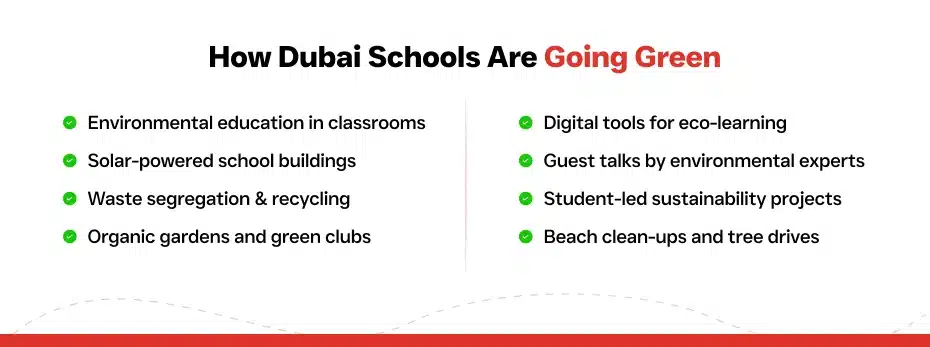
Lessons on conservation, climate science, renewable energy, and sustainable living are being incorporated into science, geography, and even the arts curricula in schools all around Dubai. Students gain a thorough awareness of environmental issues from these courses, which also inspire them to consider how their actions affect the environment.
2.Eco-Friendly Campuses
From solar panels to water-saving faucets, many school campuses in Dubai are designed to be eco-conscious. These practical changes, like using energy-efficient lighting and setting up compost bins, turn daily school life into an opportunity for hands-on learning. Such green school initiatives serve as real-world examples of sustainability for students.
3.Community Engagement Projects
Being environmentally conscious is not limited to the classroom. Schools organize recycling initiatives, tree-planting efforts, and community clean-ups in collaboration with neighborhood organizations. As they actively participate, students get an understanding of the value of teamwork and civic responsibility.
4.Nature-Based and Outdoor Education
Field trips to nature reserves and conservation parks, school gardens, and organic farming projects help students connect with nature on a deeper level. These encounters pique pupils’ interest and deepen their emotional bonds with the natural world.
5.Student-Led Green Initiatives
Many students are leading sustainability efforts within their schools. From organising zero-waste lunch days to presenting climate action ideas at school assemblies, these projects develop leadership skills and build a strong sense of ownership.
6.Smart Use of Technology
Technology also plays an important role. Schools use interactive tools, eco-learning apps, and digital platforms to teach students about environmental issues. This approach combines innovation with awareness, allowing students to learn in a way that’s both engaging and forward-looking.
7.Learning from Experts
Guest speakers, scientists, and environmentalists are regularly invited to conduct workshops and talks. These sessions bring fresh ideas, real-life examples, and inspiring stories to students, giving them a broader perspective on what it means to live sustainably.
The KHDA’s Push for Greener Education
With programs that are transforming how schools approach sustainability, the Knowledge and Human Development Authority (KHDA) is setting the standard in partnership with the UAE’s Ministry of Education. The roadmap is vital, urgent, and bold.
A major step forward is the plan to roll out green curricula across all UAE schools. Students are consistently exposed to sustainability concepts in an age-appropriate manner thanks to these curricula, which cover a variety of disciplines and age groups.
Principals and educators are at the heart of this movement. The KHDA plans to train every school leader in environmental literacy through structured five-day workshops. These sessions cover everything from climate science to sustainable school operations.
The Ministry established a goal for at least 50% of UAE schools to obtain green accreditation by the time COP28 was held in December 2023 at Expo City Dubai. This covers long-term planning for greener educational environments, implementing eco-friendly policies, and conducting sustainability assessments.
Other impactful programmes include:
- “Children’s Voice” initiative: Where student leaders are trained to participate in environmental decision-making.
- “Educator’s Voice” programme: Recognising the role of teachers as influencers and agents of environmental awareness.
- A School and University Engagement Model, where each emirate develops its own way to involve education in community sustainability.
- A UNESCO-led trust fund to support green education, with the UAE acting as a global champion.
These are not just policy ideas but practical steps that KHDA sustainability guidelines are helping schools implement on the ground.
Why Sustainability Education Matters
Teaching sustainability has long-term benefits that go beyond well-meaning intentions. Students and the world at large gain from the skills, values, and awareness that sustainable schools in Dubai foster.
1.Creating a Responsible Environment
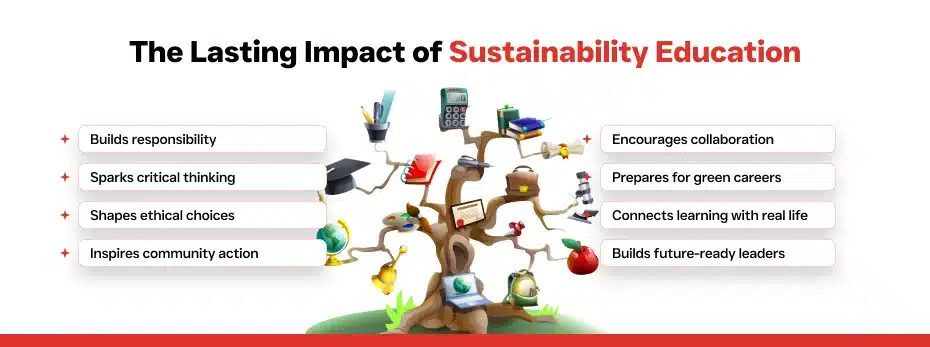
Youngsters are taught early on that their behavior counts. Little actions, such as shutting off lights when not in use or cutting back on plastic waste, create enduring habits based on environmental consciousness.
2.Developing Critical Thinking and Problem-Solving Skills
There are frequently no simple solutions to sustainability problems. Pupils are urged to consider alternatives, think imaginatively, and consider the effects of their actions. This improves their capacity to handle the complexity of the real world.
3.Promoting Ethical Consciousness
Students who comprehend the ethical aspects of sustainability, such as climate equity, social justice, and resource fairness, are better able to make more responsible decisions.
4.Inspiring Leadership and Community Service
Through school-wide projects and outreach efforts by sustainable schools in Dubai, students feel empowered to lead. They begin to see themselves as contributors to a bigger cause, and not just passive observers.
5.Promoting Interdisciplinary Learning
Sustainability blends science, art, technology, and humanities. It encourages a connected view of education, where students see how their learning relates to the world around them.
6.Preparing for Green Careers
As green sectors like renewable energy, urban farming, and eco-tourism grow, students trained in sustainability concepts will be better prepared to step into roles that contribute to a cleaner, healthier world.
7.Encouraging School-Community Collaboration
When students, teachers, parents, and communities come together on green initiatives, schools become hubs of positive change. These partnerships strengthen community bonds and expand the impact of what’s taught in the classroom of sustainable schools in Dubai.
How Dhruv Dubai Embeds Sustainability in Everyday Learning
At Dhruv Global School Dubai, sustainability is part of the school’s culture. The campus includes green spaces, energy-efficient infrastructure, and thoughtful waste management systems. The curriculum integrates lessons on environmental responsibility, mindful living, and wellness.
Students take part in gardening, energy audits, and recycling projects. These activities are not just extracurricular but are part of what Dhruv believes education should look like. The goal is to raise children who don’t just know what sustainability is, but who live it with purpose and confidence.
As a school aligned with KHDA sustainability guidelines, Dhruv is proud to be part of the movement of sustainable schools in Dubai that are committed to building a brighter, cleaner future.
Conclusion
Sustainability in education is no longer just an idea but a responsibility. Dubai’s schools are rising to the challenge by building greener campuses, involving students in environmental projects, and rethinking how lessons are taught.
The KHDA’s sustainability guidelines are helping shape a more unified, impactful approach to environmental education across the UAE. And schools like Dhruv Dubai are turning these principles into everyday reality.
At Dhruv, we believe education must go beyond academics. It should inspire students to care, create, and lead.
Join a community that believes in learning with purpose.